Key takeaways
- A list grows when you offer a specific, immediate benefit in exchange for an email address.
- Your highest-converting form is usually the one embedded inside your most popular content.
- Use double opt-in or real-time verification to stop fake and mistyped addresses at the door.
- Never buy, rent or scrape lists. They destroy deliverability and break anti-spam laws.
- Send a welcome email immediately: new subscribers are most engaged in their first 48 hours.
In this guide
- Before you start: the three elements of every list-building system
- Method 1: Create a lead magnet people actually want
- Method 2: Embed forms inside your best content
- Method 3: Offer content upgrades
- Method 4: Use popups carefully
- Method 5: Build a dedicated landing page
- Method 6: Turn your social profiles into signup channels
- Method 7: Collect emails at checkout and in your product
- Method 8: Run webinars, workshops and live sessions
- Method 9: Partner with complementary businesses
- Method 10: Use offline moments
- Method 11: Run a contest or giveaway, with caution
- Method 12: Make sharing easy
- Comparing the methods: effort vs impact
- Keep your new list clean from day one
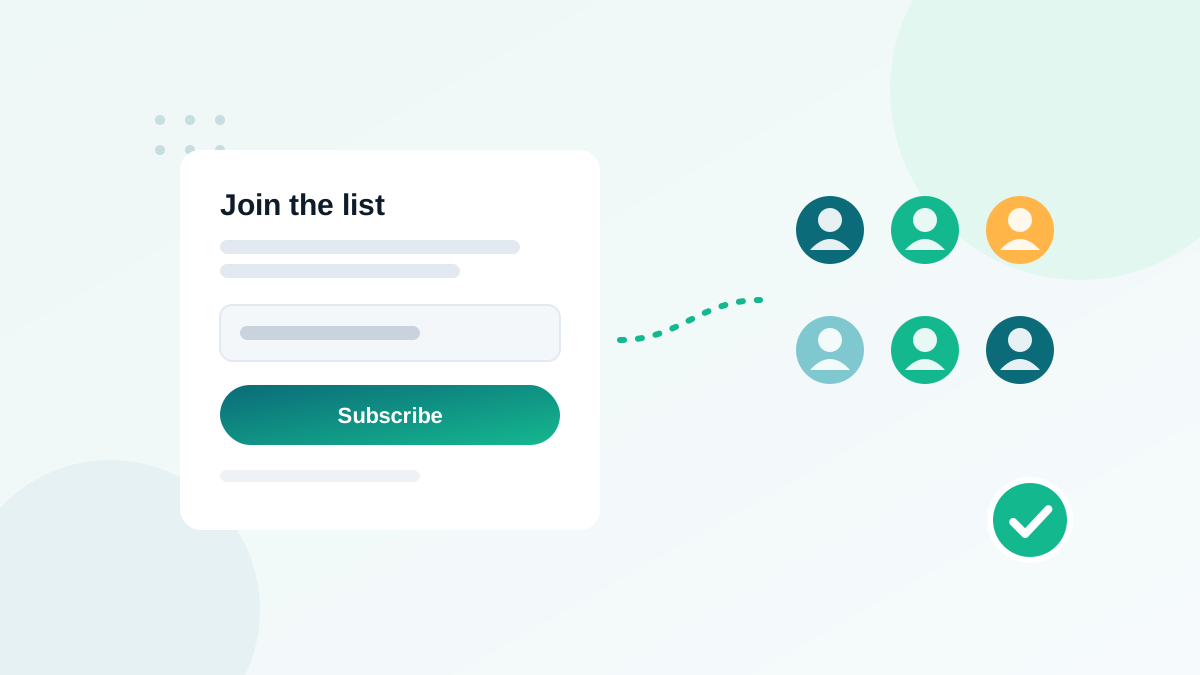
- Write a signup form that converts
- What to do with your first subscribers
- Frequently asked questions
Before you start: the three elements of every list-building system
Every working list-building system, whatever the business, has the same three parts:
- Traffic: people who visit your website, follow you, or meet you somewhere.
- An offer: a clear reason to give you their email address now.
- A capture point: a form, landing page or checkout field that collects the address and confirms consent.
When a list is not growing, one of these three is missing. Lots of traffic and few signups means the offer or the form is weak. A great offer and no signups usually means not enough traffic. Diagnose first, then pick the methods below that fix your weakest part.
Method 1: Create a lead magnet people actually want
A lead magnet is a free resource offered in exchange for an email address. It is the single most effective list-building tool, if it is specific. "Free ebook about marketing" does not convert. "The 15-point checklist to stop your emails going to spam" does.
The best lead magnets share four qualities:
- Specific: they solve one problem for one type of person.
- Quick to consume: a checklist, template or short video beats a 90-page ebook.
- Immediately useful: the reader gets a result the same day.
- Connected to what you sell: people who want the lead magnet should be good future customers.
Good formats: checklists, templates, swipe files, calculators, short email courses, discount codes, free trials, quizzes with personalized results, and resource libraries.
Method 2: Embed forms inside your best content
Your popular blog posts already attract the right people. Place a signup form inside them, not only in the sidebar or footer, where readers rarely look on mobile. Good positions are after the introduction, in the middle of the article and at the end.
Look at your analytics, find your ten most visited pages, and add a relevant form to each one first. This is often the fastest win for any website with existing traffic.
Method 3: Offer content upgrades
A content upgrade is a bonus tied to one specific article: a downloadable version of a checklist, a template mentioned in the post, or extra examples. Because it matches exactly what the reader is already interested in, it usually converts much better than a generic newsletter form.
Example: in a guide about welcome email sequences, offering "the five email templates, ready to copy" is a natural upgrade.
Method 4: Use popups carefully
Popups work, which is why so many sites use them. They also annoy people when used badly. Follow these rules:
- Do not show a popup the instant a page loads, especially on mobile. Google discourages intrusive interstitials that block content.
- Trigger it on scroll (for example 50% of the page) or on exit intent on desktop.
- Make the close button obvious.
- Show it once per visitor per period, not on every page.
- Offer the same specific benefit as your lead magnet.
Method 5: Build a dedicated landing page
A landing page has a single goal: getting the signup. No menu, no distractions, just the promise, the benefits, a little proof and the form. It is the page you link to from social profiles, podcasts, videos, ads and partner websites.
Method 6: Turn your social profiles into signup channels
Social followers are rented; subscribers are owned. Move people from one to the other:
- Put your landing page link in every profile bio.
- Regularly share a piece of your lead magnet, and invite people to get the full version by email.
- Pin a post that promotes your best free resource.
- Mention your newsletter at the end of videos and live sessions.
Method 7: Collect emails at checkout and in your product
If you sell online, every customer gives you an email address to receive their order. That does not automatically mean they agreed to marketing. Add a clear, unticked checkbox such as "Send me tips and offers by email", and you will grow your list with your best possible subscribers: people who already bought from you.
Method 8: Run webinars, workshops and live sessions
A live training requires registration by email, and attendees are highly engaged. Even a 30-minute session on a precise topic can bring in dozens of qualified subscribers. Always state clearly in the form that registrants will also receive your newsletter, or ask for that consent separately.
Method 9: Partner with complementary businesses
Find businesses that serve the same audience without competing with you. A web designer and an email marketer, a dog trainer and a pet shop, an accountant and a lawyer. Swap newsletter mentions, co-create a resource, or run a joint webinar. You reach a warm audience that already trusts your partner.
Important: partners recommend your signup page to their audience. They never share their subscribers' addresses with you. Shared lists break consent.
Method 10: Use offline moments
Events, shops, conferences and meetings are great list-building moments. Use a tablet with your signup form or a QR code that opens your landing page. Avoid paper sign-up sheets: handwritten addresses are full of errors, which later become bounces. If you do collect addresses on paper, verify them before the first send.
Method 11: Run a contest or giveaway, with caution
Giveaways can bring hundreds of signups quickly, but many entrants only want the prize. To keep quality high, offer a prize that only your target audience would want (for example, a free audit of their email program, not a smartphone), and send a welcome sequence that explains what they will receive from you next.
Method 12: Make sharing easy
Your happiest subscribers are your best recruiters. Add a short line at the end of your newsletter, such as "Know someone who would find this useful? Forward it to them", with a link to your signup page. Some senders add a simple referral reward, such as a bonus resource.
Comparing the methods: effort vs impact
| Method | Effort | Typical impact | Best for |
|---|---|---|---|
| Lead magnet | Medium | High | Everyone |
| Forms inside content | Low | High | Sites with search traffic |
| Content upgrades | Medium | High | Blogs and guides |
| Popups | Low | Medium to high | Sites with steady traffic |
| Landing page | Low | Medium | Social, ads, podcasts |
| Checkout opt-in | Low | High quality | Online shops |
| Webinars | High | High quality | Services, B2B, courses |
| Partnerships | Medium | Medium to high | Niche businesses |
| Offline (QR, tablet) | Low | Medium | Shops, events |
| Giveaways | Medium | Variable quality | Consumer brands |
Keep your new list clean from day one
Growing fast is pointless if a part of your list is made of typos, fake addresses and bots. These addresses bounce, inflate your costs and hurt your sender reputation. Three habits keep your list healthy:
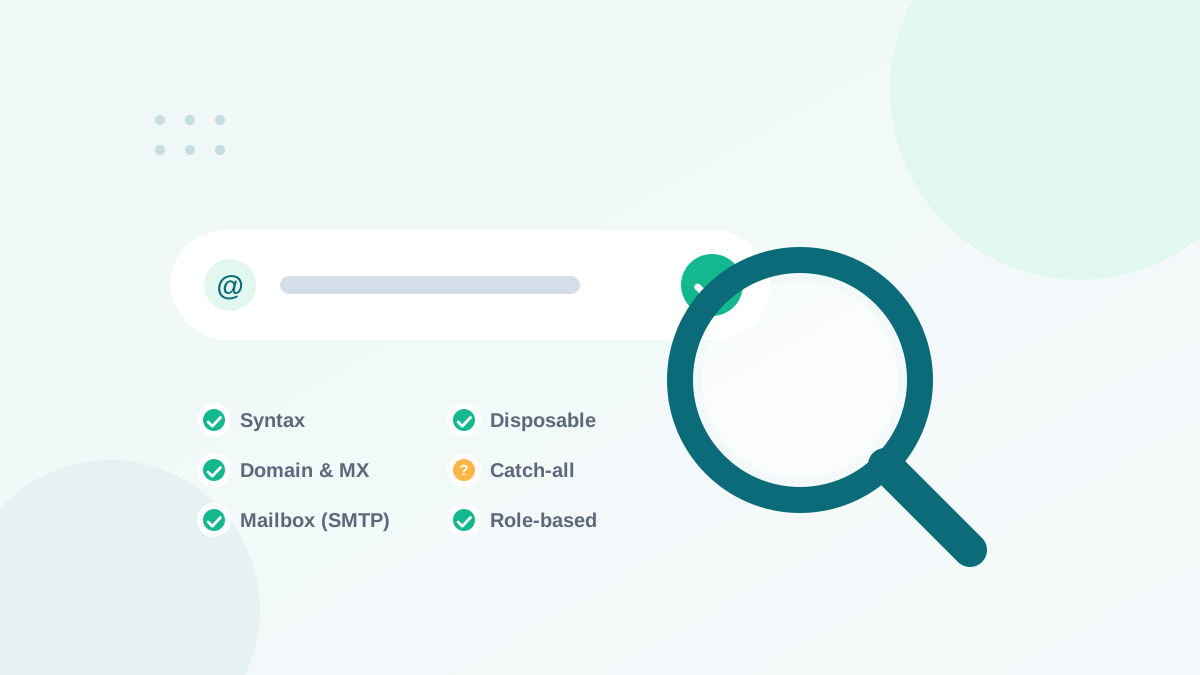
- Double opt-in or real-time verification. Double opt-in asks new subscribers to click a confirmation link. Real-time verification checks the address as it is typed. See how to verify an email address.
- Bot protection on forms. Use a honeypot field or a CAPTCHA to block automated signups.
- Regular cleaning. Even a well-built list decays over time. My step-by-step list cleaning guide shows how to keep it in shape.
Buying a list, scraping addresses from websites, or importing a contact database from a previous employer. All three break anti-spam rules in most countries, and they are the fastest way to hit spam traps and get blocked.
Write a signup form that converts
The same traffic can produce twice as many subscribers with a better form. Check these elements:
- A headline about the benefit, not "Subscribe to our newsletter".
- As few fields as possible. Email only, or email and first name. Every extra field lowers signups.
- A clear promise of frequency, such as "one email every Tuesday".
- A button with action words: "Send me the checklist" rather than "Submit".
- A short privacy line: "No spam. Unsubscribe in one click."
What to do with your first subscribers
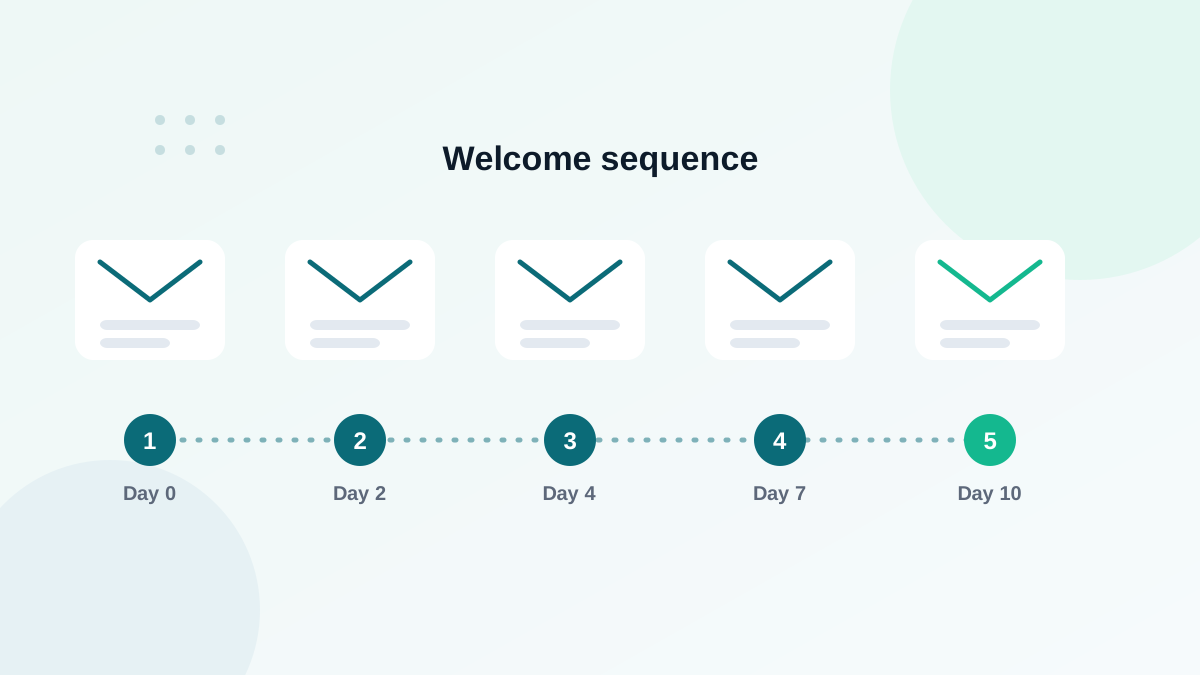
New subscribers are at peak interest. Do not wait for your next newsletter to contact them. Send a welcome email immediately, deliver the lead magnet, explain what you will send and how often, and invite a reply. A welcome sequence of a few emails turns a cold signup into a real relationship.
Then keep your promise. Send at the rhythm you announced, with content that matches the reason people joined. That is how a list grows not only in size but in value. If you are just getting started, my complete beginner's guide to email marketing covers the full setup.
Frequently asked questions
How long does it take to get 1,000 email subscribers?
It depends on your traffic and offer. A site with steady search traffic and a strong lead magnet can reach 1,000 subscribers in a few months. Without traffic, focus first on content and partnerships.
Should I use single or double opt-in?
Double opt-in gives you the cleanest list and the strongest proof of consent. Single opt-in grows faster but lets typos and fake addresses in, so pair it with real-time email verification.
What is a lead magnet?
A lead magnet is a free resource offered in exchange for an email address, such as a checklist, template, mini-course or discount. The best ones solve one specific problem quickly.
Do popups hurt the user experience?
Intrusive popups that appear instantly on mobile can annoy visitors and Google discourages them. A well-timed exit-intent or scroll-based popup on desktop, with an easy close button, usually performs well.
Can I add my customers to my email list?
Only if they agreed to receive marketing emails, or if your local law allows it for similar products and you give a clear opt-out. When in doubt, ask for explicit consent at checkout.